

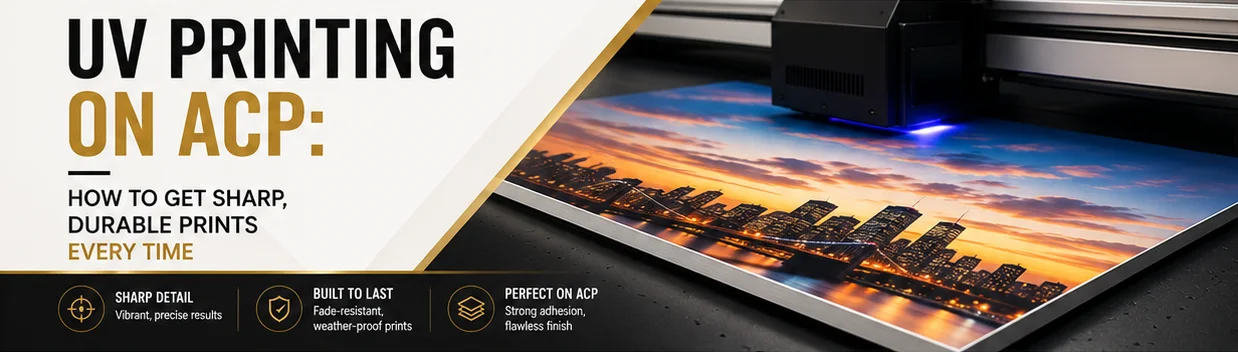
Most sign shops in the UAE have moved a big share of their work from vinyl to direct UV printing, and for good reason. No application labour, no bubbles, and graphics that run edge to edge. But we keep seeing the same expensive mistake: treating the panel as an afterthought. The printer gets all the attention while the surface under the ink decides whether the job survives.
Start with the surface, not the printer
Standard polyester coated panels will accept UV ink, but adhesion varies from batch to batch, and you find out the hard way. A panel with a UV printable surface is treated for ink bonding at the factory. No primer, no adhesion promoter, no calls from the client six months later. If printing is regular work for you, have a look at the UV printable sheets in our range. They cost less than one reprinted fascia.
Do the tape test. Every batch.
Print a small patch, let it cure properly, score a cross hatch into it and pull with tape. Takes half an hour. We have watched fabricators skip this step and lose a full weekend re-doing a storefront.
Flatness shows up in the print
Fine text and large flat colour fields expose every ripple in a panel, especially reversed out white text on dark backgrounds. Check your sheets in raking light before printing, not after.
Printing then folding? Think about the sequence
A rout and fold puts real stress on the ink right at the fold line. Keep critical graphics away from folds, or fold first and print after when the job allows it.
One last thing about outdoor work
Your ink might be rated for years in the sun, but the coating underneath has to match it. Otherwise the background fades around a perfectly sharp print, which looks stranger than even fading. If you are not sure what grade you need, the buyer’s guide walks through it.