Thickness matched to size
Larger boards need the right thickness and support so the final sign presents cleanly without visible movement or waviness.


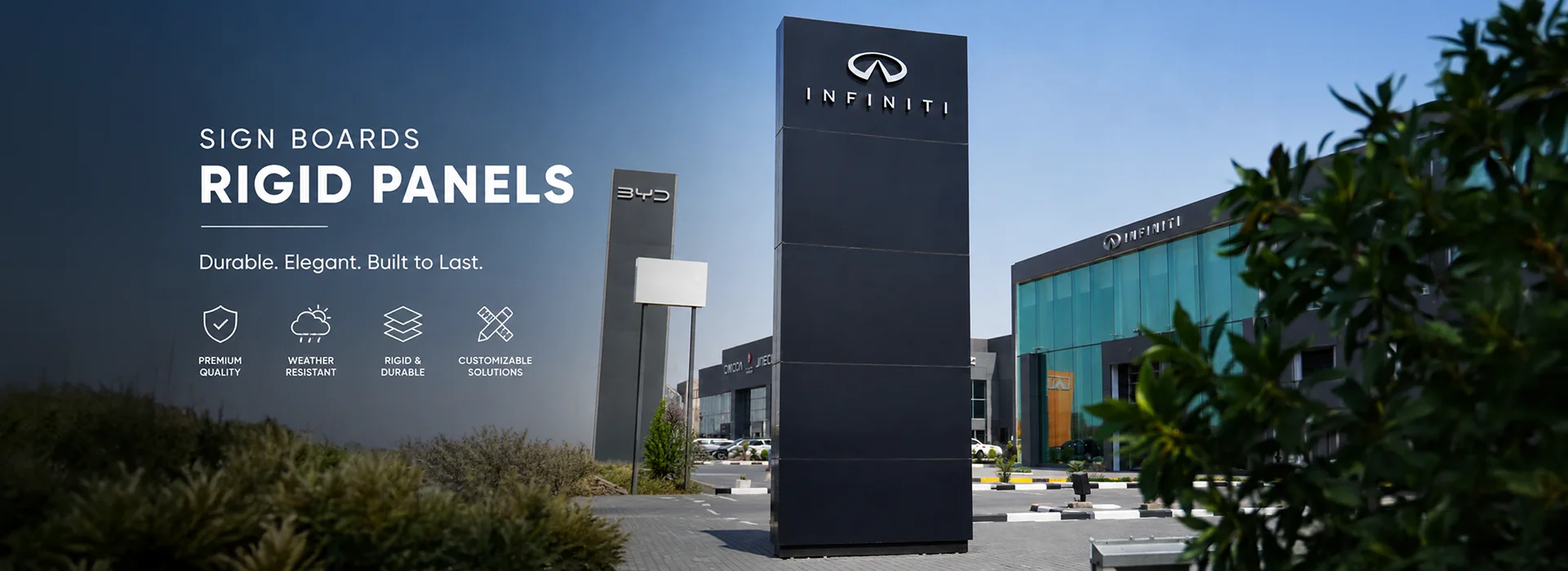
Sign boards need panels that are easy to fabricate, stable in presentation, and practical to mount. ALUCOSIGN panels support clean routing and cutting, reliable rigidity, and a consistent finished look across everyday shop signage and branded panel work.
Intended use: Signage and display applications only. Not certified for façade use. Follow local regulations. For critical projects, verify using physical samples and the latest technical sheets.
Need a tier recommendation quickly? Compare Products, review the Technical Data, or use the Buyer’s guide.

Sign boards succeed when the panel size, thickness, fabrication method, and mounting approach all work together. These are the requirements that usually decide whether the finished sign looks clean or creates rework.
Larger boards need the right thickness and support so the final sign presents cleanly without visible movement or waviness.
Routing, cutting, drilling, and handling should preserve the finished appearance while keeping edges clean.
Sign faces depend on the backing, frame, and fixing method just as much as the panel itself.
For critical sign boards, confirm thickness, finish, and mounting method using physical samples and the latest technical sheets before approval.
Match the tier to visibility, finish expectation, and daily fabrication needs. Most general sign boards start with Standard, while premium visual areas may justify Pro.
Best for everyday sign boards, routine rigid panels, and practical shop fabrication where value and predictable handling matter most.
Best for high-visibility sign boards where premium finish, flatter presentation, and stronger visual impact matter more.
Choose Digital when the sign board is primarily a direct-to-substrate print job and print workflow control is the main priority.
If you are unsure, use the Buyer’s guide to confirm the right fit before production.
Sign boards usually depend on clean edges, correct thickness choice, and stable support after installation. Use these notes to reduce failures. Information only. Verify on your equipment.
Guide: Cutting and routing ACP.
Spec help: Choosing thickness for signs.
Guidance is general. Verify on your equipment and confirm suitability for the specific sign system, mounting method, and finish requirement. For critical projects, use physical samples and the latest ALUCOSIGN technical sheets.
Most rigid signs follow one of a few practical build patterns. Choosing the right one early reduces waste, delays, and field issues.
Suitable for straightforward sign faces where the panel is fixed to a stable backing or subframe.
Used when the board is in a more visible area and flatter, cleaner presentation matters more.
When the rigid board is mainly a print carrier, surface prep and print workflow become more important.
For best results, combine the correct thickness choice with the correct support method before final fabrication starts.
Use official references for thickness, fabrication planning, and finish selection. For critical sign boards, validate with samples before final approval.
Intended use: Signage and display applications only. Not certified for façade use.
Tell us your sign size, mounting method, finish requirement, and whether printing is involved. We will recommend the right ALUCOSIGN tier and the right references to reduce rework.
Help choosing the right tier, thickness, and fabrication pathway for your sign board project.
Confirm finish appearance and suitability before placing the full order.
Confirm sizes, finishes, and lead times for your production schedule.
Intended use: Signage and display applications only. Not certified for façade use. If your project is architectural envelope or cladding, use the appropriate architectural brand and follow local regulations.
Quick answers for teams building everyday rigid signs, mounted boards, and branded panel faces.
Browse more signage use cases in Applications or confirm fit in the Buyer’s guide.